
Fee only, advice only financial planning with Steve Bridge
Advice-Only Planning, Explained
In this episode, Keith Matthews sits down with Steve Bridge, advice-only financial planner at Money Coaches Canada, for a wide-ranging conversation on one of the most important and underserved areas of Canadian financial services: fee-only, advice-only financial planning.
Steve shares his personal journey from losing money with a commission-based advisor in the early 2000s, to educating himself, to eventually building a practice where he works exclusively in clients’ best interests with no product sales, no commissions, and no conflicts of interest. Keith and Steve walk through the full 7-step financial planning process, discuss why cash flow management is the foundation of everything, and explore why advice-only planning is finally gaining the recognition it deserves in Canada.
They also tackle CPP deferral, the role of robo-advisors, workplace financial wellness seminars, and what the arrival of CRM3 means for the future of the industry.
A landmark episode for any Canadian who wants to understand what truly unbiased financial planning advice looks like and how to access it.
Happy listening!
Key Topics Covered
- Steve’s personal story: losing money with a commission advisor and discovering the advice-only model (01:10)
- What advice-only planning actually is — no product sales, no commissions, pure fiduciary planning advice (05:48)
- A brief history of fee-only planning in Canada from the ’90s to today’s resurgence (04:04)
- The full scope of a financial plan: cash flow, retirement, tax, insurance, estate, education, and more (09:10)
- Why cash flow management is the foundation of financial success regardless of income level (12:04)
- Ontario’s mandatory high school financial literacy course and why it should be national (14:34)
- The 7-step financial planning process every CFP in Canada should follow (19:38)
- Step 5: implementing the plan, the hardest step, and why accountability changes everything (23:35)
- The demand gap: only ~150 advice-only planners in Canada for millions of Canadians who need a plan (16:26)
- Robo-advisors as a strong implementation partner for advice-only clients (31:23)
- Why advice-only planning grows: more information, word of mouth, and a retiring boomer generation (34:56)
- Workplace financial wellness seminars — who hires Steve and what he covers (41:01)
- CPP deferral: the math says wait until 70, but the behavioral answer is complicated (43:09)
- The state of Canadian financial services today — more choices than ever before (50:57)
- CRM3 in January 2027: total cost transparency and what it means for the industry (51:45)
Watch on Youtube
Meet your hosts

Keith Matthews
Managing Director & Portfolio Manager



Marcelo Taboada
Associate Portfolio Manager

Lawrence Greenberg
Portfolio Manager

Jackson Matthews
Associate Portfolio Manager

Andrea LeRoyer
Tax & Client Service Associate
Read the Transcript
Keith Matthews: Welcome to the Empowered Investor Podcast, brought to you by the advisory team at Tulett, Matthews & Associates. Have you ever felt overwhelmed by the number of voices telling you how to plan or invest for your future? We’re here to help you cut through the noise, bringing clarity to your investment decisions and helping you build lasting financial peace of mind. Learn more and subscribe today at tma-invest.com.
Keith: Today we are joined by Steve Bridge, Certified Financial Planner, Money Coaches Canada. Steve, welcome to The Empowered Investor.
Steve: Thanks for having me, Keith. Excited to be here.
Keith: You know what, I’m so looking forward to today’s episode. Fee-only, advice-only financial planning. You and I have known each other for well over 10, maybe even 15 years, and I couldn’t think of a better guest to have on to talk about this subject.
Steve: Well, I am thrilled to be here, Keith. I love your podcast. It’s one of the number one podcasts I recommend to my clients.
Keith: Thank you for that support. We know you’re a fan and, you know, we share so many values in terms of how financial advice should be provided to Canadians.
Steve: Totally, totally.
Keith: So listen, today’s topic is fee-only or advice-only financial planning.
Keith: Why don’t we start the show off with you talking about how you became a financial planner? When we first spoke, you weren’t necessarily doing that.
Steve: Well, in the early 2000s, I had saved some money up and I asked my mother, what should I do with this money? She said, go see my guy, he’s great. I said okay, and I went to his office. It was very fancy, with graphs and charts, and he showed me the things, and I gave him the money. I didn’t really know what I was buying. 5 years later, my money was worth less than what it was when I started. And I didn’t know a lot about investing at the time, Keith, but I knew I should have more money than when I started. So that prompted me to start learning, educating myself. I read books, I subscribed to magazines, I read newspapers, I joined an investment club. I read a book, Derek Foster’s book, The Lazy Investor, and this light bulb was turned on.
There was this whole world out there that I had no idea about. And this inspired me to share this with my friends and family, and I gave little seminars and presentations trying to get everyone on board with this. This was in the late noughts, as we say, 2008, 2009, 2010-ish. So that’s how I got started, and I decided to make it my job. But what I learned was I talked to probably 20 different companies, 18 or 19 of them, it was all commission sales, and I didn’t want the advice I was giving to be tied to commissions. And that’s probably when I reached out to you. I reached out to Dave Chilton, Wealthy Barber, and I got some really good advice from you and him. And I found Money Coaches Canada, whose goals and values aligned with mine. Now, my journey was derailed when I was offered a job in professional sports, so I went and did that for a few years before continuing my journey as an advice-only financial planner.
Keith: Yeah, because when I spoke to you, you were just transitioning out of professional soccer.
Steve: That’s right. That’s right. A friend saw a job advertised managing a professional team, doing the logistics and scheduling and whatnot. And due to my work history, it aligned perfectly with what I’ve been doing. And I thought, wow, what a great opportunity to work in pro sports. And I did that for a few years. I absolutely loved it. But the pull, the passion of helping people with their money, was too great, and that’s what I pivoted to.
Keith: That’s something I didn’t know. So you were involved in educating yourself, doing your research, learning about financial planning, learning about investing prior to working for the Vancouver Whitecaps?
Steve: Correct. That was my path.
Keith: And then you did the soccer, I guess, full-time, but then you decided to return back to financial planning full-time and you’re with Money Coaches.
Steve: That’s right. And Money Coaches Canada was started up in 2010 by 2 women here in Vancouver who didn’t like the traditional model at the time. They were doing commission sales, but they wanted to be doing full financial plans and acting as fiduciaries. And I know you have a history in this space that even goes back before 2010, don’t you?
Keith: Yeah, well, fee-only or advice-only financial planning is not necessarily new, although it’s garnering a lot of attention right now, and there’s a lot more individuals in Canada providing it. My former firm, PWL Capital, provided fee-only financial planning in the ’90s, the mid-’90s. Wow. And back then there were firms like TE Financial, which was providing fee-only financial advice for a very small group of the population, essentially executives of large multinational firms, who had access to fee-only planning as a benefit.
The firm would pay the planner’s fees, and the planner would take care of the executive’s financial plan and tax, so they could focus on their business. So it’s always been there, this idea of fee-only financial planning. But then the commission guys and girls got involved and they sort of took financial planning and wrapped it up in, let me offer you a plan, but then we would like you to buy mutual funds at the end, or we’d like you to buy insurance. Correct. And so that’s where, you know, the whole financial planning notion kind of got derailed a little bit.
Steve: Correct. And I kind of question the quality or detail that those financial plans went into because the end goal was actually more assets under management, higher commissions, etc., etc.
Keith: Fair enough. Fair enough. So let’s jump right into definitions here. Let’s talk a little bit about fee-only planning. And offline before you said, well, Keith, I’m going to redefine fee-only planning. But let’s start with what it is. And add your redefinition in right now and then tell our listeners what it is.
Steve: I like the term advice-only planning because it leads with the word advice as opposed to leading with the word fee. It just has a better ring to it. Most of us call ourselves advice-only planners in Canada, but there are some that still use the term fee-only, and there’s only around 100 pure advice-only financial planners in Canada. And today, I should say, I’m here representing Money Coaches Canada. There’s a lot of different ways that people do this job of advice-only planning, and hopefully we can get into that. But the big differentiator, as you know, is as an advice-only planner, there’s no product sales, there’s no commissions, there’s no sales quotas or targets. We are fiduciaries who help our clients make the optimal financial decisions based on their goals and circumstances.
Keith: That’s an excellent description. And I take it that the client is charged either an hourly fee or a project fee, and in return for either the hourly or the project fee, you would deliver a series of independent advice recommendations. What else does it look like? What else does that sort of mandate look like?
Steve: So as you meet somebody and they seek you out and they find your website or however they get in touch, I always have an introductory phone call to see if we’re a good fit and I’m offering what will bring you value. And then subsequent to that, we would do a 1-hour discovery meeting with a small questionnaire filled in to have talking points to base our conversation on and see what’s important to these people and what are their goals. I mean, I am sure at TMA you also have long conversations about client goals. Like, that is fundamental to the process. And then getting clarity once we agree that we’re going to work together.
For me anyway, I don’t like to leave many stones unturned. I feel like I can do a higher quality plan the more details I have. So I probably ask for a little more detail than some of my colleagues and maybe some of the other advice-only financial planners, but it’s getting clear on what you’re spending now, and then I can go forth and say, okay, well, what’s going to be different in retirement, and are you on track for that?
Keith: Fair enough. There’s a financial planning 7-step process that I’m presuming that you walk all your clients through, and that’s part of engaging your services and delivering a step-by-step process.
Steve: That’s right. FP Canada, which is the regulating body for certified financial planners in Canada, and the Plan Fin in Quebec.
Keith: The Plan Fin is the registration in Quebec.
Steve: Yeah, yeah. So we have guidelines for things we have to go through. And yeah, here at Money Coaches Canada, we follow all of those and have conversations with clients and make recommendations on pretty much everything that has to do with your financial life, anything in your life that has a dollar sign in front of it. And that could be your cash flow and money management. It is your cash flow and money management, your net worth, your retirement planning, your spending projections, your tax minimization, your critical illness disability, life insurance, your RRSPs, TFSAs, your kids’ education planning and gifting, estate planning. Did I leave anything out? Investments. Here’s one differentiator for advice-only financial planners is that we cannot give specific buy-sell advice. We’re not securities licensed. So this is where they’re either DIY investors or they have somebody like you to implement this or an investment advisor somewhere else.
Keith: Yeah. The limitation I think is from a legal perspective is the only individuals that are allowed to recommend securities, including exchange-traded funds. So securities or individual stocks or bonds would be a licensed registered representative, or if it was done on a discretionary basis, a licensed portfolio manager. A financial planner is licensed to give general recommendations around asset allocation, around risk tolerance, around conversations around direction for the portfolio, but they can’t actually make any recommendation. I see some planners trip up in this area. Some of them go into a world of recommending where they’re not allowed to.
Steve: That’s absolutely correct. We have to be very careful that we’re not recommending specific products. We can talk factually about the fees that somebody is paying, the performance of their funds, their asset allocation, and make recommendations. Often I will run fee projections for people like, okay, I know you like your financial advisor, but did you know you’re paying 2.2% or 2.3%? And the implication of that 2.2% or 2.3% fee compounded over 20, 25 years. As you know, Keith is quite substantial. Like when I run these numbers for people, they’re usually in the hundreds of thousands of dollars. And what someone does at the end of the day is completely up to them. But when I see these numbers and say, look, this means you are working 3, 4, or 5 years longer because you’re paying these higher fees.
Keith: Absolutely. We’ve been talking about that notion for years. Yeah. Question for you. So we think about a full financial plan. We’ll go into the step process in a sec. A full financial plan is everything to do with your accumulation years, your savings, your budgeting, your retirement planning years, you’re getting ready for retirement, your risk management years, which is insurance, estate planning, which are wills and sort of mandates and power of attorney. Based on what you see individuals coming to you for, what are most people’s biggest issues that you see? Is it budgeting, simply coming to terms with finding a way to save more? Is it, uh, do they have investment problems? Where are their challenges based on what you see? You might just be seeing a small subgroup of what Canadians are struggling with, but what do you see, Steve?
Steve: Well, Keith, as you know, the answer to every personal finance question starts with, it depends.
Keith: Yep, fair enough.
Steve: And it does depend on the people coming to me. These days, as you well know, the flavor of the month, which it shouldn’t be, is decumulation. Where is my money going to come from in retirement? How do I minimize my taxes? And where, like, we’ve got RSPs and RRIFs and LIRAs and LIFs and TFSAs and non-registered investments and might be a defined benefit pension plan. So getting clear on where should my money be coming from? But yes, also people who want help with money management are not dependent on income. This is a very interesting thing. I have had people who make hundreds of thousands up to 7 figures who still have a challenge with money management, who don’t have the ability to save. And they’re like, we’re making this money, why don’t we have the ability to save? So it really runs the gamut of people who need help with money management.
Keith: Just to be clear, when you say money management, it’s their ability to manage their budget and their savings as opposed to managing a portfolio.
Steve: That’s correct. Their cash flow, their money management. And Keith, I stand by this, that cash flow management, spending and savings, is the most important piece of personal finance. If you don’t have that, nothing else matters. If more money is going out than is coming in, it doesn’t matter how your investments are doing or how you’re minimizing taxes. You will end up at zero.
Keith: It’s interesting you say that because I’ve been dealing with calls coming in and talking to people and helping people for almost 30 years. And often people call and say, I’d like to discuss my portfolio issue. And by the end of a 1-hour conversation, it’s like, well, you don’t have a portfolio issue.
Steve: Correct.
Keith: You have a cash flow issue. You’re not saving anywhere near as much as you should in order for you to reach your goals of being independent by, you know, whatever year you want to be independent by. And this is where people need this kind of coaching, which I think you guys are providing in great value. They need coaching in terms of just staying on top of their affairs and learning how to save more.
Steve: If there was one thing I could change about our education system, it would be to add this. It is a critical life skill that we’re never taught. And if we don’t have this skill, we won’t get to where we want to be.
Keith: Do you know the one province that has made it mandatory now in high school?
Steve: Enlighten me. I have my guess. I’m guessing Quebec. Is it Quebec?
Keith: I’d love to say it is, but it isn’t. It’s Ontario.
Steve: Oh, fantastic.
Keith: In Ontario, it is financial planning. I don’t know exactly what it’s called, but it’s a mandatory course.
Steve: Amazing.
Keith: For every graduating high school student in Ontario, they must learn about budgeting, saving, investing. How do you buy a house? How does a mortgage work? You know, how does a line of credit work? Like, how are you supposed to get through your life? I remember reaching out to somebody just last week saying this should be mandatory across the country, just like you say.
Steve: Brilliant. Brilliant. We never see advertisements on TV for budgeting or cash flow planning or spending and savings, do we? Because there’s no money in it.
Keith: Correct.
Steve: The money is in commission sales of investments and insurance, to be direct.
Keith: 100%. 100%. Well, this is why, you know, when you mentioned you feel there’s about 100 advice-only advisors in Canada, Canada probably has about 100,000 licensed either investment or financial planning or product or portfolio. So 100 out of 100,000 and partially, I believe some of that is in the past case, just simply when they felt like they were getting free financial planning advice, but it was tied to a commission. They didn’t really realize it was free. They didn’t really realize that they were paying for it. They thought it was free. But the reality of it is they would’ve been better off hiring a fee-only or advice-only planner. Advice-only planners, kind of 15 years ago, it’s a tough breed. It was hard to earn a living as an advice-only planner. Big time.
Steve: Big time. I wouldn’t say impossible, but it was very, very difficult, very niche. And I’m so glad the space is growing and the number is growing. And I said 100, maybe it’s up to 120 or maybe 150 of pure advice-only financial planners.
Keith: And listen, I don’t have the stats because they’re just not easily accessible, but I presume that of those planners, almost most of them are fully booked and have waiting lists of individuals who want help and are prepared to pay for it. Now, let me ask you a question. Go back when you first started. Yes, everybody’s got to build a track record. Your first few years, did you have more capacity? Or like, in other words, could you have used more clients?
Steve: Absolutely. Absolutely. In those first few years, you know, being self-employed and building a business, lots of people know the challenge with that. But as you say, when someone could get a free financial plan, and I’m using air quotes here, from their bank advisor or other advisor, why would they pay somebody for what they think is the same thing? So, it was a few years, Keith, before my business started to take off. Now, I’ve got some very successful colleagues who have been doing very well for a very long time. But we are seeing at Money Coaches Canada, all of us have waiting lists and we’ve just brought on 2 new coaches because we’re all at capacity. So I’m very happy that the word is out. But you painted this picture very well before we came on air about how many people could access an advice-only planner in Canada. And this is where there’s a gap, isn’t there?
Keith: Well, yeah, the math that I did was I said, you know, Steve, how many coaches do you have at Money Canada? And you mentioned 15. And I said, how many plans a year would they do on average? And some do more and some do less, but let’s say 30 plans a year. So, you know, you take 15 times 30, so you’re doing 500 plans. My next point was, imagine if, let’s say you represent 10% of Canada’s fee-only planners, 10% in the numbers, you know, 15. So, you know, multiply your 500 by 10. Let’s say 7,000 plans get done a year in Canada by fee-only, advice-only planners, 7,000. Imagine if 5% of the Canadian population said they needed a plan. There’s like 2 million people who would need a plan. The entire fee-only universe would not have the capacity to do a fee-only plan.
Steve: You’re 100% right. And I’m happy to say that there are people who are working on solving this problem. And you might know Owen from Adviice. His platform is working on that, getting it to the masses. I think Preet Banerjee was doing a bit of work on that as well. There are some very smart people who are trying to get this to the masses, smarter than me, with the technological ability to make it happen. But you’re absolutely right.
Keith: Well, we will talk about this at the end. At the end of the day, like you just say, Canadians have better choices today than ever before. Ever before, which is fantastic. Steve, we tried to touch base on this a little while ago, the 7 steps. Could we just take a moment and pause? Could you walk our listeners through the 7-step financial planning process? Like, what are the steps in theory that a consumer would go through if they were doing a full financial plan with advice only.
Steve: Yeah, excellent. So every financial planner, CFP, Certified Financial Planner in Canada should be going through this. So you can check this with your own financial planner and make sure that they’re following these steps. So establishing and defining the client-planner relationship is very important. What am I signing up for? What will I receive? What won’t I receive from this? How long will it go? What are the costs, etc.?
Keith: And that specifically also includes typically a letter of engagement. How much will I pay for this? How much am I paying per hour? What is the scope of the business?
Steve: Correct. And that’s very important, Keith, because there is a wide range of advice and services that advice-only planners provide here in Canada. And it might be like, just an hour consultation, whereas the work that I do is 25 to 30 hours of work and a series of meetings, 12 months, the whole deal. So that’s very, very important, and I’m very glad you said that. Next is gathering client data and determining goals. This is huge. And determining goals, I was never a big goals person before I started working with people and their money, but figuring out what’s important to somebody cannot be understated. And I think for 2 big reasons. Number one, we can then say, once we get clear on where our money is going, is my money going towards what’s most important to me? So, I say that saving for my kids’ education is important to me, but I don’t see a line item there for that. Or I see you say saving for retirement. Show me where saving for retirement is in your cash flow, in your budget. And the other part of goals that I think is very important is that having these goals written down, codified, allows you to weigh options against each other. So which is more important? Is it getting the roof fixed or taking my family on vacation? And then you get to decide, the client gets to decide which is more important at this point. So gathering client data, and different planners will go into different levels of detail on this. Personally, I’m a detailed person, and I think the more information I have, the better. Just my personal preference on gathering. Okay, that was step 2.
Keith: Step 3?
Steve: Analyzing and assessing the client’s financial status. So that’s where I often say to my clients, I kind of joke that their first meeting is more for my benefit than for their benefit because I’m clear on, okay, this is how much insurance you have, this is where your investments are, this is how much RRSP room you have, this is your cash flow, this is all the data. Then I can go away confidently to do planning based on all their information and their goals. And most advice-only financial planners use some very sophisticated software to come up with recommendations, different scenarios of how things might play out. Like if I buy a house, if I buy a bigger house, if I retire at 60, or if I retire at 65. So then we can move into step 4, and that is presenting the financial planning recommendations. And that’s for me usually at a second client meeting is, okay, based on what we talked about last time, these are how things may play out for you. Of course, there’s a lot of assumptions that go into this, Keith, like investment returns, inflation, how much actually somebody saves per year when they actually decide to retire or actually take CPP and OAS. So there’s a lot of assumptions that go into these, and these projections help guide decisions. They shouldn’t be taken as written in stone because it’s like doing your taxes 10 years in advance. Like, you can’t do your taxes 10 years in advance, nor can you predict what investments are going to do or when you actually might want to leave your job or how much you actually save per year. So, they’re guidelines to help you make the best decisions for you.
Keith: Fair enough.
Steve: The next one is implementing them. And now, this is the interesting one, and this is where sometimes I wish I had control over my client’s money so that I could say, look, I’m just going to do the $30,000 RRSP contribution for you to make sure it gets done. Step 5 is implementing the recommendations, and that’s where a firm like TMA has an advantage. You’ve got your hand on the button, so to speak. You can actually do those. I have to give my clients a to-do sheet, take action, action steps like this is what you should do. And $15,000 to a spousal RRSP, $10,000 to a personal RRSP, TFSAs, make sure you open up a new non-registered account, et cetera, et cetera. But the implementation is the next part that’s on the client to follow through on, which is where, as an advice-only planner, I don’t touch anybody’s money. So I can’t actually do that. Do you have any thoughts on that?
Keith: I do. We’ve been in a firm where for 30 years we’re actually implementing. And Edmond Fhima, we’ll speak about that for a second, has always been one of the early fee-only financial planners in Canada. He is formerly at TE Financial, and he was doing some independent consulting when I first started the business here in 2005, and he joined us formally 12 years ago. So he’s been doing fee-only plans. We’ve actually stopped doing them now because we include them inside of our overall service. But like anything, you know, there can be great ideas, but the details are in the execution. And I think fee-only planning offers enormous value in highlighting, in solving, in determining, in showing. This is one area where I feel it’s a shortcoming because left to their own devices, people do not implement properly. It’s like they are left to their own devices. Many do-it-yourself investors may feel like they’re doing okay, but, you know, they’ve got 20 or 25% of their portfolio always in cash because they’re always worried there’s a market correction. Sometimes they have 50% of their portfolios in cash and they never can really stay properly invested throughout the entire journey, a 20-year journey, a 10-year journey.
Steve: Couldn’t agree more, Keith. When I started educating myself and reading all the things and giving these presentations, I thought everyone could do DIY. So, like, you just go to the thing, open the account, and buy the thing, and that’s it. But what I’ve learned after almost 12 years of working with people and their money is that probably 95 to 98% of people should not be managing their own money. It is harder than people think. There might be technical challenges like actually opening a discount brokerage account online, or actually choosing the ETFs that are best. But even more so, I think, is behavioral temperament challenges.
Keith: But there’s the investment side, which you’re talking about, the behavioral side. There’s also the savings side. So, when a fee-only plan says you need to save X amount and the client looks at you and says, yes, I can do that.
Steve: Yes.
Keith: And then you go back and you check up 2 years later and say, well, did you do that saving? And they go, well, I didn’t really do it. So why didn’t you do it? Well, because I was never held accountable. How come you weren’t accountable? Because I didn’t have an implementation plan. Oh, yeah. And so that to me is where, you know, I joke with Edmond in our office who built his practice initially on fee-only planning. And I’d say, Edmond, you know, the interesting thing about you guys, the fee-only advice-only planners, is you don’t have to live with the consequences. You build the plan, you give it once, and you leave. It’s like we have to deal with the issues after, with the client spending more than they thought they would spend, pulling more money out faster than they ever thought that their plan would say. And then they, you know, like we have to deal with the live stuff. So that to me is the only part that’s got its own challenges. But I think as long as it, from your perspective, as long as it’s addressed, and I know you do do that, that you show your clients, listen, this is the shortcomings, which you have to focus on, then you increase the odds. It’s the same thing with your next step, which is after implementation, is to monitor the plan. Most fee-only planners, and you guys might be changing it, maybe you can speak to this a little bit, don’t have a recurring engagement, although you’re probably trying to change that now. And I’d love to hear your thoughts on that because for, I would say, the last 15 years, people would kind of buy a plan, pay for a plan, and leave, and maybe never come back. Talk to us a little bit about that.
Steve: Yeah, hit the nail on the head. Our co-founder, Karen Mezgal, has been beating this drum for many, many years. So now, most of my colleagues at Money Coaches Canada are starting with a 12-month engagement as a minimum, with the idea that we just move right into continued financial planning and support the rest of a client’s life for exactly the reasons you describe. First of all, our lives always change, right? We could list 100 life changes. You get a job, you quit your job, you want to retire, you have a baby, you want to move houses, you want to buy a house, you want to take a sabbatical. Like, we could list 100 things ongoing. First of all, life changes. But second of all is the part you talked about, and that is having an accountability partner to make sure that you stay on track with your plan and revising that plan. The step in the FP Canada guidelines is monitoring the plan, but adjusting to all these changes that will happen and being there to hold someone accountable might sound a little bit maybe too strict, but supporting somebody.
Keith: It’s an ongoing coach. Yeah. Professional athletes have ongoing coaches. They don’t hire them once. They kind of keep them for a long time. And I think in your formula, which is fee-only advice, or advice-only, the way someone’s going to hire you on a continual basis is most likely going to be either they’re doing their investments on their own, and so you’re keeping track with that, or they’re hiring a very low-fee portfolio manager only. And that combination is really good for clients. For example, at our firm, they get all that in an ongoing relationship all the time. So, and this is really what I think is amazing about where we’re going in Canada is Canadians of all sorts of shapes, sizes, and financial backgrounds have these beautiful options they can navigate and work towards. I look at our group right now. You went through the 7-step. I watched three of our portfolio managers go through their financial planning designation in the last 3 years. So, Ruben,
Steve: Excellent.
Keith: Marcelo and Jackson are all now licensed financial planners in Quebec, which is a very tough thing to get through, along with Edmond, who’s in charge of our financial planning department. So, these are 4 licensed, and our firm is now licensed as a financial planner, licensed as a portfolio manager and a financial planner with these 4 sub-licenses in place. And they talk about this sort of 7-step. I’ve seen Edmond do the 7-step, and this is part of the regular approach. If you think about it, it just makes sense. It’s a consulting approach, which is to understand what you’re dealing with, analyze, discuss, recommend, monitor.
Steve: That’s absolutely right. For implementation, you raised a good point about portfolio manager versus DIY. I like the idea of a robo-advisor as well. So, an advice-only planner writing it out for you. This is the asset allocation per account. Here, take this to a robo-advisor. For some people, not everybody, and implement it there.
Keith: I 100% agree. I’m a huge fan of Wealthsimple. We’ve talked about that often with a lot of Canadians for the right person. The only caveat I say to these individuals using Wealthsimple or something like that, stay away from the crypto door, from the stock picking door, and then most recently from the predictive market door. So that’s the only challenge on those platforms. As long as a person is guided correctly to build that or to use their sort of all-in-one built-in portfolios, I think that increases the odds of long-term success.
Steve: Agreed. Agreed. And I’ll just do a little plug for one of my favorites, Justwealth. They’re a smaller firm, so you can actually talk to someone and get through to somebody. It’s a small enough robo-advisor that the customer service is very high.
Keith: Beautiful. Love it. We’ve just, just sort of spent this fair amount of time defining fee-only planning, who you work with, the process. Let me ask you one last question on this. Of all of the different steps when you go through, what is the step that you feel takes the most amount of time? And we talked about this a little bit before we got on the show, and this has to do with data gathering.
Steve: Yeah, that is probably the one that can take the longest for us as well, because I think people are a little bit surprised at how much information we’re asking for. And the only reason I’m asking for that is so I can do as good a job as possible, so I can deliver the best possible financial plan as opposed to winging it. But most people who go through the process of, okay, I want a financial plan and I research who I want to speak to and I want these answers, most people come in with enough motivation that they will do the work. But some people drop off. Some people are like, you know what, I didn’t realize it was going to be this much work.
Keith: And so essentially what you’re describing is they come in for a financial plan or a module of a plan or some section where they want improvement clarity. And you say, great, I’ve done the interview, I’m now going to give you 32 things that you need to go get for me, or 25 things, or whatever it is. And they go, because this is what we’ve experienced, and they go, great, I’ll come back to you next week or 2 weeks from now. But it really takes them four and a half months to get, and then they may or may not actually have it. That’s, I think, what you’re speaking to.
Steve: It is, it is. I’m a bit of a bulldog, Keith. I’m like, our next meeting’s in 1 month. You have 3 weeks to get this. Then my colleague is going to follow up who does my financial profile, getting the numbers in there. And we follow up and we check in like weekly. How are you doing? How are you making out? Good for you. Yeah. And then it’s done in 2 or 3 weeks. Once in a while, it has to be pushed out. We try to get it, you know, once we get the momentum, get going.
Keith: Okay. Excellent. Fantastic. Let’s switch into sort of this, the next gear here. We’ve defined it, fee-only advice-only planning. We’ve talked about it. We’ve talked about the process. We’ve talked about the types of clients that go through it. Let’s talk a little bit about the history of financial planning, the evolution. We did mention it at the beginning of the show. We talked about fee-only planning for around 30 years. It was really reserved to the small group, and then it went through commission, and now there’s a resurgence of it. We’ve been doing it internally for 20 years. Why do you think it’s becoming more attractive now? What are the main reasons why people are gravitating towards wanting to use a fee-only planner?
Steve: Keith, are we still in the age of information? Are we still in the information age? I don’t know if that’s changed to the AI age. I don’t know. But let’s pretend we’re in the information age and there is more information available. People can read more online. Google didn’t exist, you know, however many years ago. People like Rob Carrick have been getting the word out about advice-only planning and guys like Bruce Sellery as well. And you, of course, have been talking about this. So, it’s getting talked about more and there’s more places online that people can hear about it. That’s what I think.
Keith: Fair enough.
Steve: And word of mouth now, Reddit’s a thing, like people are putting into there and Facebook groups, the physician Facebook group is massive and advice-only planners are featured in there. And that didn’t exist 20 years ago.
Keith: You’re right. The awareness didn’t exist. There was a very small group, and I mean, literally 1% of the population that had even exposure to this. Now, a lot more of the population. And quite frankly, you know, the boomers are kind of going through that retirement or pre-retirement stage now. There’s a genuine need for more information about, you know, just making sure everything works for retirement, for example.
Steve: Exactly.
Keith: Or for pre-retirement. There are also more do-it-yourself investors, which I think lends itself very well to do-it-yourself investors because do-it-yourself investors tend not to be very good at do-it-yourself financial planning.
Steve: Oh, that’s right, Keith. You know, investing is one piece of the Trivial Pursuit pie that is financial planning. Investing is just that one little piece, but it’s the one that gets the most attention because it’s the most interesting. It makes the best water cooler talk. It’s exciting, you know, Tesla stocks and weed stocks and crypto and whatever. It’s a very interesting part, but the investment section is just one part of a financial plan. And that’s where an advice-only financial planner can come in and people can try to figure it out themselves and that’s all fine. But the way I see it, Keith, it’s kind of like, yeah, I can learn to change the brakes on my car. I could watch some YouTube videos, but for that important job, maybe I want to outsource it to a professional to be doing it because the consequences of not doing it properly are too great.
Keith: Absolutely. 100%. I would also add that a lot of firms that do the full service, do good portfolio management work, do good planning work, have high minimums too. And so that tends to be out of reach for a certain, a significant percentage of the population who still can benefit from and need that professional advice.
Steve: Agreed. And advice-only planners, there is no minimum. Like, it doesn’t matter. I’ve had clients who make $500,000 who have a negative net worth. Yeah. Like no AUM would want to take them on, but they needed the guidance.
Keith: Yeah. Well, so I had a phone call. You’ll find this one interesting, Steve. I did not refer the person to you. I referred it to a local person in Montreal, but you’ll chuckle after. We’re talking about who might reach out for fee-only advice. So I had a young couple reach out who wanted to take a sabbatical and they wanted to plan their cash flow around their sabbatical because they wanted to take a sailing trip around the world. Like, this is the most unusual request. So they want to hire a fee-only planner to help them plan their sabbatical and cash flow, and how to do things. And I just thought I’d never seen that type of request before, ever. As an avid sailor, I wished them luck and referred them to a local fee-only planner where they could go have a discussion around how to deal with that.
Steve: Love everything about that. That’s really cool.
Keith: Okay. So Steve, I mean, I agree with all the points about the turning point. Let’s call it the growth of fee-only or advice-only planning. Take us through a month in Steve Bridges’ life right now. I know you also do seminars. You do, you stand up and you get in front of larger groups and you talk about planning and cash flow.
Steve: Taxes, retirement, CPP.
Keith: Yeah. What does your life look like in a month? And then what does a typical coach at Money Coach, what does it look like as well?
Steve: Well, at Money Coaches Canada, we’re all under this umbrella of Money Coaches Canada, and some of us are employees, and some of us are grandfathered in as associates. A little bit different for all of us. Part of our time is responding to requests, inquiries on our services, and determining, is that person a good fit? Can we provide value to them? Part of it might be setting up meetings with those people. Some of it might be doing client meetings. Like, all of our clients are at different stages of the financial planning process. So we might be meeting with our clients. Like when a client finishes an engagement with us in 12 months, they have the choice to keep going with us and we keep meeting with them 1, 2, or 3 times a year. So we might be doing ongoing client work or ongoing client meetings. There’s paperwork to do that I know you’re very familiar with. It might be invoicing, although we have great support staff that help with that. It might, it might be keeping up with client notes. It might be for me doing some speaking or reaching out for speaking engagements. I really enjoy that part of my job, and I’m moving to doing more of that. Because to your point, Keith, when I’m working on my own, I help, you know, 30 or 40 couples or singles a year. But when I go into organizations and companies and present to 30, 40, 50, 100 people, I’m getting the message out to many more people, which I really, really enjoy. Because as you and I have talked about many times, there is a severe lack of unbiased financial advice.
Keith: So, can you describe what that looks like? Are you going into small businesses? Are you going into large corporations? Are you going into public corporations? Are you going into private corporations? Who are you going to see? And what does a typical presentation look like?
Steve: Yeah, the answer to your first question is all of the above. All of the above. I had an interesting call with a small electrical company here on the North Shore of Vancouver, and they want to bring me in because their workers keep asking for raises and they can’t afford to keep giving them raises. And they’re making good money. It’s just that their money management skills are not there. So they think, instead of managing my money better, I’ll just ask my company for a raise. The company wants to keep the people, but they can’t afford to just keep giving everybody raises. So better money management will help the employees and it will help the company as well.
Keith: And you say money management, how to make sure your money goes further, how to save better, and how to budget better.
Steve: Yes.
Keith: You go in and give seminars specifically on that?
Steve: Yes, with resources so people can actually follow through on that. Cash flow: where is my money going, and what are my needs versus my wants? Lifestyle inflation, like the number one enemy to becoming wealthy is lifestyle inflation. And it’s an interesting conversation because, you know, we’re paid more, I deserve more, but if we just keep on that track, we’ll never get ahead. So it might be cash flow, it might be lifestyle inflation, it might be net worth, it might be taxes. Very few of us have been explained how the tax system in Canada works, the progressive tax system, and RSPs, how RSPs work, and how much should I be putting into there. A lot of public organizations, like municipalities, will bring me in. It’s helping people understand the value of their defined benefit pension plan and the different options. How does a defined benefit pension plan fit in with my retirement, along with my RRSPs and TFSAs and my CPP and OAS? Some places will bring me in just to do a talk on CPP and OAS, Canada Pension Plan and Old Age Security. I sometimes joke that if you want to start a bar fight in Canada, you walk in and say, you should all start your CPP at 70.
Keith: Yeah,
Steve: and then duck.
Keith: Mind you, you’re probably seeing a little bit more buy-in now. Are you seeing buy-in on that topic?
Steve: You know, Keith, as you know, with everything in financial planning, there is a math and financial answer, and there is a behavioral, personal, preferential answer. Personal finance is more personal than finance. The average person is leaving something like $100,000 on the table by taking CPP early.
Keith: Let’s talk about this for a second here. So the math suggests deferral, typically, unless there’s a predisposed health issue.
Steve: Correct. Correct.
Keith: There’s these big reasons why you might want to take it early. The math suggests delaying it up to, let’s call it 70, just for discussion purposes. Is that what you’re seeing? And is that what you’re seeing most of these people wanting to do?
Steve: So, the numbers say delay to 70, but a lot of people, the psychological thing is, well, I’ve paid into this. It’s my money. I’m owed this money. I’m going to take it at 60. And the other part is, well, I had an uncle paid into it all his life and he died at 62. He never got anything out of it. That’s the argument to which I tongue-in-cheek say, well, if you really think you’re going to die at 62, get spending. What are you doing here at work?
Keith: Yeah, yeah, yeah, right.
Steve: But, the risk is really a longevity risk. The real risk is longevity risk. It’s not passing early.
Keith: Okay, so these are big topics. I can see why companies would say, let’s get you in, Steve, to talk for an hour, or for longer. Is it a workshop? Do you do half-day sessions?
Steve: yeah,
Keith: Is it 2-hour sessions? What do you do exactly? I know it’s custom, but what does it look like?
Steve: One of the number one feedback comments I get in my little survey is, I wish it was longer. No matter how long the session is, Keith, once people get into this, and I make jokes about how boring and dry and stressful money can be, I try to make my sessions the opposite of all of those things, make them fun, engaging, and nonjudgmental, et cetera. People want more. So, I encourage a workplace to do as long as they can that fits into their workday. I do an hour, 90 minutes, 2 hours, 3 hours, 6 hours, all of the above.
Keith: I know you, I know you can last 6 hours because you’re passionate about this, but can the attendees last 6 hours?
Steve: Interestingly enough, yes. So, it might look like 3 hours in the morning, 3 hours in the afternoon, and I schedule breaks. You know, every hour we take 10 minutes for a stretch and whatever, and people are still coming up to me at the breaks with questions or coming up to me at lunch with questions. Once people get into this, like, money is not talked about enough. You know this, that money’s not talked about enough in our society. And this changes the conversation and gets people engaged and getting the buy-in of what’s in it for me. People start to lean in. Oh, I could retire a year earlier. Oh, I could give my kids some more money. Oh, I could buy a nicer boat or whatever. Like, but now I’m interested.
Keith: Yeah, fair enough. Absolutely. Let me ask you a question about that. I’m assuming that along the way you ask for feedback. Do they sign surveys, or what kind of responses do you typically get from the audiences after they’ve listened to you for an hour or 2 on some of these cash flow management issues? Is it very positive? Is it mediocre? Like, what do you get as feedback?
Steve: Keith, I’m really happy to say that the feedback is overwhelmingly positive. And I may be cursing myself here, but I have a 100% recommendation rating of people who would like to see me again.
Keith: Wow. Well, it doesn’t surprise me, Steve, because at the end of the day, with a very genuine feeling, you’re going in and talking about something that’s incredibly important that probably nobody talks to them about. And they’re getting it on a complimentary basis, but they’re just getting, it’s live, it’s real, it’s relative to things that they’re living. I can totally see that.
Steve: Yeah, I really enjoy it. And the word is getting out and Financial Literacy Month is November. It kind of ramps up around there as well. So, I love doing it. Once someone brings me in, I’m happy to say that more often than not, I’m asked back to give another presentation next time on taxes, retirement, or investing.
Keith: Good for you. I love it. That’s fantastic. Let me ask you a question here. We didn’t prepare for this one at all. What is the best app that you can recommend to our listeners for money management? So, tracking, budgeting, spending. I’m sure you’ve got a couple that you kind of refer to. What are the top few that you like to recommend?
Steve: So, you’re going to be really interested in this, Keith, but I use good old Excel. I use it so people get clear on where their money is going, because they have to type it in and look at it. And what we develop for them, me and my colleagues at Money Coaches Canada, is a forward-looking spending and savings plan. So, no more tracking or looking backwards, only saving ahead. Like, let’s say I want to spend $3,000 a year on travel. Well, our clients have an account that’s marked travel, and every single month, it gets $250 into that account. So when I want to take that trip, I look in my bank and I see my travel account has $3,000. Great, I can pay for my trip. I’m only saving money. So it’s a little bit like the jar or envelope system. I know you remember Gail Vaz-Oxlade from Till Debt Do Us Part, the show in the 2000s where she helped people pay off debt and she had these jars and people had to save ahead for things. It’s a little bit like that, but electronically. Like me personally, I have 7 savings accounts, all labeled for different purposes. And whatever’s in the account, I can spend. And I’ve put money in there based on everything else that’s going on in my life, like my rent, my cell phone, my car insurance, etc., etc. So it’s a little antiquated, the system, and not a whole digital thing. But that’s what I use. And that’s what most of my clients use. Now, there is an app that you may have heard of called YNAB, You Need a Budget. And it kind of does the same thing.
Keith: How do you say that exactly?
Steve: YNAB. Y-N-A-B. It’s an acronym for You Need a Budget.
Keith: Okay. You Need a Budget. Okay. Fair enough. Fair enough.
Steve: But for gathering and stuff, I don’t use an app. We don’t use an app. We haven’t found a Canadian one that allows us to do what we want to do.
Keith: Okay. Fantastic. So listen, before we wrap up, there’s one more section here. This has been a great discussion so far, Steve. State of the Union right now in Canadian financial services. Yeah, I’m going to go back in time. Twenty, twenty-five years ago, when I first started, I said, imagine if we could get even close to what they have in the US in terms of choices for consumers. And what I meant by that was if we could only get index products like Vanguard built, if we could only have firms like Dimensional Fund Advisors in Canada, if we could only start having these different options available: advice only, fee only, fully integrated services. If we could only get there, this would be beautiful for Canadians. Well, I think we’re actually there now.
Steve: We’re getting there, Keith. But, you know, I think our biggest challenge in this country is companies lobbying against it. That’s why we need something like CRM2 and CRM3. I’m blown away that we even need something like CRM, CRM 2 and CRM 3 disclosing fees. I mean, I know how much I pay my haircutter. I know how much I pay my mechanic to get my car fixed. Why shouldn’t I know how much I’m paying my investment advisor? But the industry for many, many years has been fighting this. And there was a report, you’ll be familiar with it, from 1998. I can’t remember the woman.
Keith: Glorianne Stromberg.
Steve: I knew you’d know. I knew you’d know. 1998. But no action has been taken, because the lobby is so strong against clarity and transparency on fees.
Keith: You’re being very polite here. It’s the large financial institutions, primarily the Canadian banks and the Canadian insurance companies, that lobby because they’re protecting such high-margin products that they sell. And this is all going to start becoming more at the forefront now. CRM 3, we’ll be doing a podcast on that soon with Mike coming back, our compliance officer. CRM 3 will be official January of 2027. Where Canadians will have not only from CRM2 the advice fee, but they will now have the total cost reported back to them. So this will flush out ultimately and allow consumers to kind of weigh, what am I paying in dollars and percentage, and what services am I receiving? And there’ll be no more hiding. And so I really think we’re on the cusp of incredible choices for Canadians. Love it. And I think fee-only planning is huge. You said there’s maybe 150 now. Well, you know, in 10 years, maybe 5,000, maybe 3,000, who knows? But there definitely will be enough demand. There will be demand for firms like ours, which produce total comprehensive services across for reasonable fees, all fully integrated. You know, 2 decades ago, we couldn’t offer index solutions. Now we have as good a selection as anybody living in the most competitive environment in the world, which is the United States market. Canadians have access to this, and it’s fantastic. It used to be that you needed to have, you know, multi-million dollars to get great service. Now you can get great services, maybe in components, but you can get great service.
Steve: Agreed, agreed.
Keith: We’re at the final step here, Steve. Your takeaway, your final comments to our listeners. What would you like to leave as your takeaway?
Steve: I think it’s for people to understand what they’re getting, what they’re paying for, and how much they’re paying. Whatever they’re doing, whatever that is, and what are the gaps. If you’re a DIY investor, that’s great, but do you have tax minimization and retirement planning in, as well as cash flow planning? If you have a financial advisor or investment advisor, or how much are you paying in fees and how have your investments performed over the medium to long term? I’m talking 5 to 10 years. And if they are not keeping up with the index like the TSX or the S&P or whatever, why not? And could you move to index funds?
Keith: Fair enough. Love it. And my takeaway would be, you know, Steve, I know that we’ve referred many times to people who call in looking for fee-only advice. Advice only. We definitely use Money Coach as someone on our list of individuals that they should consider. So, thank you again for joining us. On behalf of our listeners, thank you. And to our listeners, thank you so much, and we’ll see you in the next episode.
Steve: Thanks for having me, Keith. That was really fun.
Keith: Thanks for listening to The Empowered Investor Podcast, brought to you by Tulett, Matthews & Associates. If you’ve enjoyed today’s episode, be sure to follow or subscribe. And share it with somebody who wants to invest with clarity and confidence. To learn more about how we help investors build lasting financial peace of mind, visit us at tma-invest.com. Until next time, stay informed, stay empowered, and stay on track to your financial goals. Investment and investing strategies should be evaluated based on your own objectives. Listeners of this podcast should use their best judgment and consult a financial expert prior to making any investment decisions based on the information found in this podcast.
Be sure to subscribe on Apple, Spotify, or wherever you get your podcasts. And feel free to drop us a line at lawrence@tma-invest.com or 514-695-0096 ext.112. Follow Tulett, Matthews & Associates on social media on LinkedIn, Facebook, and more! Follow The Empowered Investor on Facebook, LinkedIn, and Instagram
Dive Deeper: Related Episodes

CRM3 Explained: What Canadian Investors Need to Know Before 2027
CRM3 is the next evolution of investment cost transparency, arriving on Canadian statements in 2027. TMA’s chief compliance officer, Michael Baldoni, joins Keith Matthews to explain what the new report shows, what FER, MER, and TER actually mean, and what it means for your portfolio.
Fiduciary vs. Suitability: What Every Canadian Investor Needs to Know
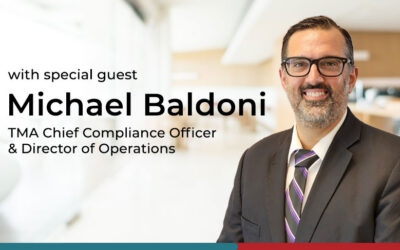
Fiduciary care or suitability? TMA’s chief compliance officer, Michael Baldoni, joins Keith Matthews to explain the two standards Canadian investment professionals work under, and the one question that reveals which one your advisor owes you.

Philanthropy & Tax Planning with Flow-Through Shares
Albert Labelle explains flow-through shares — a tax-smart way to shrink your bill and multiply your charitable giving, one of Canada’s best-kept secrets.
Stay on top of your financial education
Subcribe and follow to get updates on important wealth management topics.

Our Approach
Contact
3535 St-Charles Bvld
Suite 703
Kirkland (Québec) H9H 5B9
Connect