
Fiduciary vs. Suitability: What Every Canadian Investor Needs to Know
Fiduciary vs. suitability: what your advisor owes you
In this episode, Keith Matthews sits down with TMA’s Chief Compliance Officer and Director of Operations, Michael Baldoni, for an important and eye-opening conversation on a topic most Canadian investors don’t fully understand: fiduciary care.
Michael brings a wealth of experience from large financial institutions including National Bank Financial, MD Financial, and Scotia’s High Net Worth Division to break down what fiduciary responsibility actually means, how it differs from the industry’s more common suitability standard, and why the distinction matters enormously for your financial outcomes.
Keith and Michael walk through the three main types of investment professionals Canadians encounter portfolio managers, investment advisors, and financial planners and explain exactly which standard applies to each. They also explore what it means to work with an independent portfolio manager versus one operating inside a large financial institution, and clarify what fiduciary care does and doesn’t guarantee.
A must-listen for any Canadian investor who wants to truly understand who is and who isn’t mandated to act in their client’s best interest.
Happy listening!
Key Topics Covered
- Introduction to Michael Baldoni — background, career path, and why he chose compliance (01:54)
- From hundreds of portfolio managers at Scotia to a team of six at TMA — the difference between big firms and independent ones (03:48)
- What is fiduciary care? The legal and ethical obligation to act solely in a client’s best interest (06:34)
- The four pillars of fiduciary responsibility: loyalty, care, disclosure, and avoiding conflicts of interest (06:34)
- Other professions with fiduciary duties — lawyers, corporate directors, doctors (07:51)
- Fiduciary vs. suitability — the two standards and what separates them (08:36)
- The three categories: portfolio manager, investment advisor, and financial planner — who has which responsibility? (10:08)
- Discretionary vs. non-discretionary accounts — what this means in practice (10:52)
- Why “financial advisor” is a catch-all title that tells you very little (13:42)
- How Canadians should actually filter and evaluate the professionals they work with (14:18)
- How to verify someone’s registration category — using provincial securities commission websites (15:49)
- Designations vs. registration — why having a CFA or CIM doesn’t automatically mean fiduciary responsibility (17:37)
- Live examples: what a non-discretionary recommendation looks like vs. a discretionary decision (18:43)
- Why discretionary portfolio management leads to better outcomes in bear markets (19:23)
- Independent portfolio managers vs. large financial institutions — the key structural differences (21:27)
- How in-house products create potential conflicts of interest — even for registered portfolio managers (22:51)
- Why TMA’s use of Dimensional Fund Advisors does not compromise its fiduciary independence (25:17)
- Every firm has some conflicts — what matters is how they’re managed and disclosed (27:53)
- Fiduciary care doesn’t guarantee good investment results — an important nuance (30:02)
- Final takeaway: fiduciary first, always — and what options exist for Canadians who don’t qualify (31:42)
- Sneak peek: the next episode on CRM3 and new total cost reporting coming to client statements in 2027 (33:19)
Meet your hosts
Keith Matthews
Managing Director & Portfolio Manager



Marcelo Taboada
Associate Portfolio Manager

Lawrence Greenberg
Portfolio Manager
Jackson Matthews
Associate Portfolio Manager
Andrea LeRoyer
Tax & Client Service Associate
Read the Transcript
Welcome to the Empowered Investor Podcast, brought to you by the advisory team at Tulett, Matthews & Associates. Have you ever felt overwhelmed by the number of voices telling you how to plan or invest for your future? We’re here to help you cut through the noise, bringing clarity to your investment decisions and helping you build lasting financial peace of mind. Learn more and subscribe today at tma-invest.com.
Keith: Welcome to The Empowered Investor. My name is Keith Matthews, and today’s episode is about fiduciary care and what it really means for Canadian investors. It’s a topic that deserves far more attention than it gets, and most Canadian investors don’t fully understand it. We’ll break down what fiduciary responsibility is, why it matters, and how it differs from the industry’s most common standard: suitability. We’ll help you understand exactly what level of responsibility different investment professionals owe you, whether you’re working with a portfolio manager, an investment advisor, or a financial planner.
This is a high-level conversation, and some of these terms, like fiduciary and suitability, can sound dry. But please bear with us. This is exactly how you determine whether your advisory group, your firm, your person is really working in your best interest. It’s a great topic, and we’re going to cover a lot of ground. To help us get through it, we have our very own chief compliance officer, Michael Baldoni. Michael, welcome to today’s episode.
Michael: Thank you very much, Keith. I’m really looking forward to my maiden voyage when it comes to podcasts, so I appreciate the invite.
Keith: You’re going to do amazing. For our listeners, Michael joined us one year and three months ago. He has a tremendous background, coming from some of the largest financial institutions in the country, and we’re fortunate he agreed to work at TMA. Let’s hear directly from him. Before we get into fiduciary care, I want to understand more about your background, Mike. Why compliance?
Michael: You may be a little surprised. I didn’t wake up one morning thinking compliance was what I wanted to do. Very few people do. What I enjoyed about it was the risks and the regulations behind things: why things happen the way they do. That’s what brought me to compliance, along with trying to make it easily understandable for the business. It’s easy to write policies and procedures, but those are just words on a document. The real work is making sure the team understands them and can operationalize them.
Keith: You’ve got a broad background and a lot of knowledge. You worked at National Bank Financial, MD Financial, and Scotia’s high-net-worth division. Tell us how that career evolved, and about your most recent role overseeing compliance for a group of investment professionals at Scotia.
Michael: We could start with MD Financial Management. I worked in compliance there, but it was a broader role covering anti-money laundering programs and a little of everything. My more recent role was with 1832 Private Investment Council under the Scotia umbrella, where I led a dedicated compliance team, no longer covering AML. That later became a director role overseeing the compliance program at Scotia.
Keith: And how many portfolio managers would that include?
Michael: A few hundred.
Keith: So you’ve gone from a few hundred portfolio managers to a group of six here at TMA.
Michael: Yeah.
Keith: How does that feel?
Michael: It’s been refreshing. As much as I enjoyed my time at Scotia, MD, and National Bank, you become pigeonholed. You’re one piece of the overall compliance puzzle, a specialist in one particular item. In my current role, I get to oversee everything: compliance, director of operations, IT, risk management, marketing, even the podcast. Putting it all together has broadened my understanding of how a firm actually runs.
Keith: I remember the day you came in for our first discussion, Mike. The chief compliance officer role was held for 25 years by Don Tulett, one of the firm’s founders, so this was a major hire. At a small firm, wearing multiple hats, chief compliance officer, director of operations, overseeing how the business runs, is an exciting role.
Michael: Very much so. We’re far more nimble. We can turn on a dime when a decision needs to be made. It’s a matter of sitting down in a room and hammering out the answer. Bigger firms are more like a cruise ship: it takes time to get things moving in the direction you want.
Keith: You’re also exposed to an independent platform, similar to the RIA model, the registered investment advisor model, in the United States. We’re not tied to any in-house product, and that’s exactly where today’s discussion is headed.
Michael: Exactly.
Keith: The RIA is the fiduciary model of choice in the United States, and that’s what we look like here.
Michael: Yep.
Keith: Besides being an excellent compliance officer, you have a real background following sports. You’re a big hit at the firm: whatever the topic, you have a strong opinion or some moment of brilliance to share. Where did that come from?
Michael: Keep in mind, compliance isn’t just the evil empire. There’s some light to the darkness. I’ve played sports pretty much my whole life, so following it comes naturally, and it’s a good way to get away from the stresses of a regular business day.
Keith: Fair enough. You’re an amazing team player, the team loves you, and clients will love you too. Let’s jump into today’s topic. What is fiduciary care? What does that mean exactly?
Michael: There’s a definition, and it’s worth breaking it into parts. Fiduciary care is the legal and ethical obligation to act solely in someone’s best interest. That’s exactly what we do when clients entrust us with their money: our goal is always to act in the client’s best interest.
There are a few categories. The first is loyalty: putting the client’s interest ahead of our own, both as advisors and as a firm. Then there’s care: acting with the skill and diligence a professional would use. Our people hold the designations and registration categories that back that up. Then there’s disclosure: clients need to understand what they’re getting into before they get into it, so we disclose everything about their account and our firm. And then there’s avoiding conflicts. Conflicts of interest exist in almost every business. Our goal is to avoid them as much as we can, and where we can’t fully avoid them, to manage and mitigate them so they don’t cause a problem.
Keith: So what other types of professions have a fiduciary responsibility to whoever they serve?
Michael: Portfolio management, yes. Lawyers, corporate directors, and even some doctors have a fiduciary responsibility to act in the best interest of their client or patient.
Keith: With the definition in place, let’s talk about the other major standard. In Canada and the US, we compare fiduciary care to suitability. Every advisor operates under one or the other. What’s the difference between fiduciary and suitability responsibility?
Michael: They’re not really in the same class. Fiduciary care is the higher of the two standards: I’m looking out for your best interest. Suitability just means I need to make sure an investment is okay for you. As an example, I’d give you a questionnaire on your risk tolerance and risk capacity, which produces a profile. Based on that profile, I’d select a fund or suggest an investment. It’s suitable for you. Whether it’s the best option for you is a separate question. Suitability only tells you it’s okay, not that it’s the best.
Keith: Whereas with fiduciary, you’re always attempting to provide the very best.
Michael: Correct.
Keith: We’ll get into what that means on different platforms. Thank you for that distinction. Now let’s turn to the different titles, because this is where it gets confusing for Canadians: people’s registered positions, the titles on a business card or a LinkedIn profile, how they’re introduced at the firm. Let’s break down three categories: portfolio manager, investment advisor, and financial planner. Walk us through what each one does, and how each relates to fiduciary care or suitability.
Michael: It’s easy to understand at a high level, and then we can go back into each one. A portfolio manager is discretionary. That means I can act without confirming with the client every time. We meet the client, build the portfolio, and then whenever I need to transact in the client’s best interest, I don’t need their confirmation first.
An investment advisor, or registered representative, is non-discretionary. That’s the suitability relationship we talked about: whenever I want to transact for the client,
Keith: Or a stock or bond or any investment.
Michael: Any type of product, I need the client’s consent first. I make the recommendation, check with the client, and they tell me yes or no. Then I execute. That’s suitability. With a discretionary portfolio manager, I transact because I believe it’s the best move for you, and you’ve given me the authority to make that decision. It’s worth noting that the portfolio management licence itself is a challenge to get. The courses are difficult, and it’s one of the harder designations to earn. But with that comes the ultimate responsibility to the client.
Keith: Well, yeah, it’s the registration.
Michael: The registration of it.
Keith: That’s difficult, and you need designations and experience to qualify for the registration.
Michael: Correct. So that’s the difference between portfolio manager and investment advisor on the suitability side. A financial planner is almost its own category. As the title suggests, their goal is to provide a plan and guidance on your overall situation: investments, estate planning, taxation, whatever it may be. They’re not there to execute a purchase or tell you to buy something. They give you the plan, and you as the client execute it. A lot of our portfolio managers here are also financial planners, which is an enormous advantage: you get the plan, and we execute it for you too. Of the three, financial planning is very different from the other two.
Keith: So fiduciary responsibility and suitability are really investment-driven.
Michael: Correct.
Keith: As opposed to financial planning-driven.
Michael: Correct.
Keith: Individuals can have multiple licences.
Michael: One hundred percent.
Keith: You can be a financial planner and an investment advisor, working in a non-discretionary suitability relationship.
Michael: Exactly.
Keith: You can be a portfolio manager with a fiduciary responsibility and also be a financial planner.
Michael: Correct. All the time.
Keith: You probably wouldn’t be a portfolio manager and an investment advisor.
Michael: Or could you?
Keith: Do you have to pick a track?
Michael: You could, in terms of the courses. You might have the credentials to do both. But it’s not typical to see someone who’s both a portfolio manager and an investment advisor.
Keith: What about the title financial advisor? You hear financial advisor, wealth advisor, all sorts of terms passed around in the industry. Does any of that actually mean anything?
Michael: Financial advisor is used almost like an umbrella term, a catch-all for the industry. Unfortunately, that means it can mean many things, so it doesn’t tell you much on its own. When comparing professional titles, you have to look beyond the title itself to the registration category. A lot of people say, “I’m a financial advisor,” but what matters is the designations behind it and what they’re actually registered to do. That’s what makes all the difference.
Keith: That leads right into the next question. How should Canadians filter through this and understand what they’re actually dealing with, whether they’re handed a business card, sitting in an office, or looking at a website? What should they be asking? Is there a set of criteria to determine whether someone has a fiduciary responsibility or a suitability responsibility?
Michael: People need to be careful, because titles get thrown around easily in this industry, and some sound better than they are. The right question isn’t what’s on the business card or the email signature. It’s: what is your registration category? What are you actually registered to do? Knowing that gives you a far better understanding of who you’re dealing with, and what to expect from the accounts they open for you.
Keith: It’s interesting you say that, because that’s exactly what people have to do. Think about it: if you’re a Canadian trying to decide who to hire, you’re weighing fiduciary responsibility against suitability. Hopefully today’s episode helps people understand that difference. If I’m an investor, I want a fiduciary. It sounds like the highest level of service, with the most integrity. Walking up to someone and asking, “Where are you registered? What’s your registration category?” feels like an odd question. But you’re saying it’s the only one that really matters.
Michael: Yes, asking the question definitely helps. But some people will be shy about asking, “What are you registered in?” There are other ways to find out. You can check registration categories online. If someone says they’re a portfolio manager registered with the AMF, for example, you can go to the AMF website, use its search function, type in the person’s name and their firm, and it will show you every registration category they hold.
Keith: Fair enough. And what you’re referring to is the AMF. For our listeners outside Quebec, the equivalent could be the Ontario Securities Commission, the Alberta Securities Commission, or the BC Securities Commission. These are all provincial securities regulators.
Michael: Any province you’re in, there’s a provincial registry where you’d be able to find that information.
Keith: Fair enough. So the first question is to ask, what are you registered as?
Michael: Correct.
Keith: What are the other types of things you might look at?
Michael: There’s a lot you’d want to understand about the advisor you’re working with: their independence, how they get compensated, what type of account you’ll be opening, and what they’re actually able to do for you.
Keith: What’s the importance of account type? If I’m not mistaken, opening a managed or discretionary account comes with a portfolio manager, and with that, a fiduciary duty of care.
Michael: Correct. That’s right.
Keith: And if you open a non-discretionary account, where you sign off on every trade, you’re in a relationship governed by suitability.
Michael: That’s correct. Exactly.
Keith: So a lot comes down to discretionary versus non-discretionary. It’s a bit repetitive, but it’s worth reinforcing.
Michael: And you’ll know that right off the bat if you ask the question, or go to any of the provincial registries. You’ll see what the person’s allowed to do.
Keith: The next one I want to tackle is designation, because there are some nuances there. In discretionary portfolio management, you need to have completed your CIM or your CFA, plus a certain number of years of work experience, plus a certain number of years supervised by a portfolio management firm, to become a registrant who can act on a discretionary basis.
Michael: Correct. It’s a very stringent path, and it’s not an easy one.
Keith: But here’s where I’m going with this: the designation alone doesn’t tell you whether someone has a fiduciary responsibility. You could hold a designation built for portfolio management and still be selling mutual funds.
Michael: Absolutely.
Keith: As a registered representative.
Michael: That’s exactly right. You could hold several designations that, put together, look like they should lead to a portfolio manager registration, and still not actually be one.
Keith: So, Mike, we’ve talked about discretionary versus non-discretionary. Can you give us some real examples of what that looks like?
Michael: Let’s start with non-discretionary, the suitability side. An advisor tells a client, “I recommend you sell investment A and buy investment B. Do you want me to proceed?” The client is presented with the options and makes the final call. The client is hiring this person, but it’s the client making the decision at the end of the day, not the advisor.
Keith: So the advisor recommends, the client acknowledges and makes the final decision.
Michael: Exactly.
Keith: That’s how I started too, Mike. Most people begin their careers in the non-discretionary world and move toward discretionary. One thing I didn’t like about that process is that clients aren’t necessarily well positioned to make those final decisions. Here’s an example: markets are down 30%, and the right move is to buy stocks. Very few individual investors want to buy in a bear market, even though it’s the perfect time to do it. With a discretionary portfolio management system doing disciplined rebalancing, you’ll actually be buying. That’s what our firm has done for the last 25 years: every time there’s a market decline, our records show us selling bonds and buying stocks. You can’t do that in a non-discretionary world.
Michael: It would be far more challenging.
Keith: Well, if you’re dealing with 100 clients, that’s 100 phone calls to make, just to say, let’s buy more stocks in this down market. It would take months to get through them all.
Michael: Exactly. And at the end of the day, the decision has to come from the client. Even if you think it’s a good idea, a risk-averse client could still say no, and that might not be in their best overall interest.
Keith: Okay, so that’s what non-discretionary looks like. Now let’s look at fiduciary responsibility. What does that look like?
Michael: At the beginning, let’s say I open an account with you, Keith. We’d go over the objectives: what do you want to do, what are you hoping to achieve, what’s the money for. Then you put your trust in the portfolio manager to make decisions in your best interest. I no longer need to call you to confirm every move. I can act on my own, because I have to look out for your best interest. I’m buying investment A and selling investment B because I truly believe it’s the best thing for you. That’s an enormous difference between the two.
Keith: Fair enough. Let’s add some nuance here and talk about independence. How is TMA, as an independent portfolio manager, different from a portfolio manager at a large financial institution that builds its own products?
Michael: There’s an important distinction here. Being a portfolio manager at TMA versus at a large institution is exactly the same from a registration standpoint. There’s no difference in what they can do for clients. The big difference is the environment the fiduciary operates in. A portfolio manager at a big bank has to work within the bank’s investment platform, product shelf, and corporate structure. Depending on the institution, that can include third-party investments, but it can also include products the bank manufactures itself. There’s nothing inherently wrong with offering proprietary products; they can be good investments. But you can see the conflict: you’re offering products you’re required to sell, or that are the only ones you have access to.
Keith: To be fair, that portfolio manager at a large institution can still choose individual stocks the way they want. But they also work from a product shelf directed by the institution, and often there’s an in-house product built by that firm.
Michael: That’s exactly it.
Keith: And because you’ve worked at large bank-owned firms and now independently, you’ve seen this from both sides. You’re a credible source for this discussion.
Michael: Absolutely. As I mentioned, there’s nothing necessarily wrong with it. It’s just that a client could perceive it as a conflict: I’m offering a product for the bank I work for.
Keith: Fair enough. So how are we, or any other independent firm, different?
Michael: It’s the structure.
Keith: Independent in that we’re not building anything, I guess.
Michael: Correct. Independence comes down to two things. The structure here is very different from a large financial institution.
Keith: Or a large investment counsellor building its own active strategies.
Michael: Anyone with proprietary products.
Keith: Yeah.
Michael: Anyone in that position, it’s not comparing apples to apples. The first difference at TMA is that we’re independently owned. No bank owns us, no insurance company owns us, and we don’t manufacture our own investments.
Keith: And manufacturing matters here, because a large investment counsellor would typically run its own in-house pools.
Michael: Correct.
Keith: We don’t have our own in-house pools.
Michael: We don’t. We don’t manufacture our own products, and we’re not compensated by any investment manufacturer based on what goes into a client’s portfolio. We don’t have a parent organization dictating which products we have to use. We have the ability to choose what we honestly believe is most appropriate for our clients, not what’s simply offered to us. To me, that’s the most important difference between being independent and being with a large financial institution or a bigger shop.
Keith: You’ve experienced both now.
Michael: Correct.
Keith: And can you feel the difference?
Michael: It is different. For our listeners, we’re proud to use Dimensional Fund Advisors’ strategies. There’s a reason, a method behind why we’ve selected what we’ve selected, and everyone here believes those options are the best for our clients.
Keith: Speaking of that, here’s my next question. Someone might look at our firm and say, “You’re using a lot of strategies from one organization, Dimensional Fund Advisors.” Given that, do you feel we still deliver the same fiduciary care that someone would want from any top-tier fiduciary?
Michael: It’s a fair question, Keith. But the big difference is that TMA doesn’t own DFA, and DFA doesn’t own TMA. There are no economic or compensation arrangements between us. They don’t pay us for using their funds, and we don’t pay them for anything. It’s a choice we’ve made as an independent firm because we genuinely believe DFA is best for our clients, not because we’re being paid to use them.
Keith: You should be a portfolio manager.
Michael: Almost. Hey, you never know.
Keith: You’re one hundred percent correct. I’ve been working with clients for 30 years now. I’ve always said, if we find a better solution, we will use it.
Michael: Right.
Keith: No ifs, ands, or buts. I started managing money back in the mid-1990s using exchange-traded funds, and we felt Dimensional’s strategies offered broader diversification, better-structured portfolios, and exposure to the expected returns we wanted for our clients. We’re free to use any vehicle: stocks, individual bonds, managed accounts, ETFs. In the end, we chose to build our investment philosophy around the one we’re dedicated to: evidence-based investing.
Michael: Independence is one thing, but it doesn’t mean you need to use 25 different investment companies just to say you use 25 investment companies. The key to independence is that we, as a firm, have the ability to choose. We’ve determined DFA is the best option for our clients, and that’s why we use them, not because of compensation, and not just to pad the list. We believe in their strategy, and we’re not paid to say so.
Keith: And within our business model, the only compensation that comes into this firm is a client’s investment management fee, paid for services rendered in portfolio and financial planning.
Michael: Correct.
Keith: Let’s switch gears. We’re in the last third of the episode. Could someone listening today walk away thinking we have no conflicts of interest at all?
Michael: No, I wouldn’t say that, and I don’t want anyone to think that banks have conflicts, big firms have conflicts, but we don’t. Every financial institution has potential conflicts of interest, including TMA. We shouldn’t pretend they don’t exist. What our independent structure allows us to do is remove certain types of conflicts, particularly around compensation: how am I getting paid, and is there an advantage to selling you one investment over another? Those are conflicts we don’t have to worry about, because we have no proprietary products, and we’re not pushing products on you. There’s a big difference between saying we have no conflicts at all and saying the conflicts we do have are minor, compared to the bigger compensation-driven conflicts elsewhere.
Keith: And even for the minor ones, we have to produce a report and have control mechanisms in place, covering things like employee access and how we trade our own personal accounts, along with outside business activities. But these aren’t the kind of conflicts that would make most people think, that’s not in my best interest.
Michael: I agree, and this is getting a bit technical, but every year we’re required to list every potential conflict of interest the firm might have. We call it a conflict of interest matrix, and thankfully there isn’t much on it. As you said, it covers things like outside activities and our own advisors’ investment accounts. The goal is that we’ve avoided most of the bigger conflicts, and we have strong controls in place to manage the small ones we do have, which makes the whole thing far safer.
Keith: Fair enough. A couple of last questions. Here’s one I like: being a fiduciary doesn’t mean we’re always going to make the right investment decisions. You made that point earlier, and I thought it was a good one.
Michael: It is. Being a fiduciary doesn’t mean I can predict markets. We don’t have a crystal ball that other firms don’t have. Not every investment choice we make will go up. The fiduciary responsibility is about how the decisions are made, not necessarily the outcome. Markets will always be uncertain, and looking out for your best interest doesn’t automatically mean things will go up. That’s not always the case.
Keith: Or automatically things will always be great.
Michael: Correct, it’s not always the case. Our responsibility is to make the right decisions based on the client’s circumstances, their objectives, and everything they’ve entrusted to us. Good decisions don’t always equal fantastic results.
Keith: Great insights. What I like about this episode is that our clients are getting their first real exposure to Michael. He’s a phenomenal addition to our team and to how we’re building this business, and I think you’ll be inspired hearing him talk through these regulations and insights. If you’re not a client, and you’re an investor, this is still a valuable episode, because at the end of the day, we want to share how to pick an advisor and how to think about fiduciary versus suitability. Mike, let me ask you for your final wrap-up.
Michael: Okay.
Keith: If you had to choose between an advisor who offers fiduciary care and one who offers suitability, how would you answer that?
Michael: It’s an easy answer: I’d choose fiduciary, seven days a week. The issue is that not everyone has access to a fiduciary. Many firms have minimums, and if you don’t meet that dollar amount, they won’t take you on, which leaves some Canadians with only the suitability option. But fiduciary is the right answer.
Keith: Fiduciary first, if you can get it. And if you can’t, which is the case for a large percentage of Canadians, there are other options: robo-advisors like Wealthsimple, or a more traditional path where you’ll need to learn how to navigate advice based on suitability.
Michael: Right, and you need to make the final decision. That’s the big difference with suitability, whether it’s Wealthsimple or an advisor at a branch. They’ll give you the recommendation, but you’re the one who has to say yes. That puts extra pressure on the client: if it doesn’t go well, it falls on you, because you gave the final approval.
Keith: Fair enough, and very well said. Mike, you did your first podcast today.
Michael: Absolutely.
Keith: How do you feel?
Michael: I feel good. Hopefully the first of many. Like you said earlier, compliance isn’t always the most riveting topic, but it’s important.
Keith: It was a great, lively, and important conversation. Thank you. I know you prepared hard for this and did your due diligence. You did fantastic. We’ve already got another one lined up, on the new CRM3.
Michael: Correct.
Keith: That’ll be coming up in the next episode or two, all about the new reporting requirements for total costs.
Michael: Correct, so that’s a bit of a sneak peek. It’ll appear on clients’ statements starting in 2027, covering all the fees calculated throughout 2026.
Keith: Looking forward to it. On behalf of our listeners, thank you so much for sharing your knowledge, your time, and your expertise. And to our listeners, thank you for tuning in. We’ll see you next time.
Michael: Thank you very much, Keith.
Keith: Thanks for listening to The Empowered Investor Podcast, brought to you by Tulett, Matthews & Associates. If you enjoyed today’s episode, follow or subscribe, and share it with someone who wants to invest with clarity and confidence. To learn more about how we help investors build lasting financial peace of mind, visit us at tma-invest.com. Until next time, stay informed, stay empowered, and stay on track toward your financial goals.
Investing strategies should be evaluated based on your own objectives. Listeners of this podcast should use their best judgment and consult a financial expert before making any investment decisions based on the information in this podcast.
Be sure to subscribe on Apple, Spotify, or wherever you get your podcasts. And feel free to drop us a line at lawrence@tma-invest.com or 514-695-0096 ext.112. Follow Tulett, Matthews & Associates on social media on LinkedIn, Facebook, and more! Follow The Empowered Investor on Facebook, LinkedIn, and Instagram
Dive Deeper: Related Episodes
Philanthropy & Tax Planning with Flow-Through Shares
Albert Labelle explains flow-through shares — a tax-smart way to shrink your bill and multiply your charitable giving, one of Canada’s best-kept secrets.

2026 Mid-Year Investment Review
Geopolitical chaos, oil spikes and stocks still up double digits. A data-driven mid-year review of 2026 returns, the small cap rotation, and what history says about investing at all-time highs.
Your Money, Your Legacy: How Donor Advised Funds Work
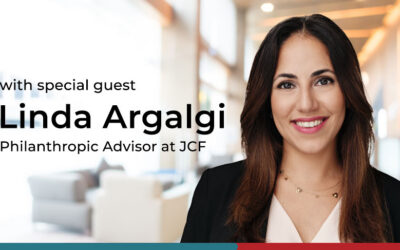
CPA and Philanthropic Advisor Linda Argalgi breaks down donor advised funds and how they compare to private foundations, tax efficiency, legacy planning, and who benefits most.
Stay on top of your financial education
Subcribe and follow to get updates on important wealth management topics.

Our Approach
Contact
3535 St-Charles Bvld
Suite 703
Kirkland (Québec) H9H 5B9
Connect